

Bath had been a sacred place long before the arrival of the Romans. Pre- Roman evidence indicates that the warm natural springs were dedicated to the worship of the Celtic Goddess Sulis, who the Romans associated with their deity Minerva. She was the Roman Goddess of wisdom; family; defensive war; justice; civilisation; the law; the arts, specifically weaving; trade; and strategy. Represented by the owl, the olive tree, the spear and the spindle amongst other things. Her Greek equivalent was Athena.
For those of us who studied the Cambridge Latin Course in school; the city has acquired an almost mythical status. Book Three takes place in Aquae Sulis after Cogidubnus, the client King of England visits the city after falling ill.
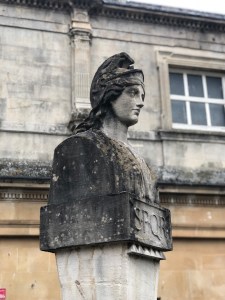
The Temple
The Romans began constructing the temple complex c60AD and continued building there for over 300 years. The temple was built in a classical style and stood on a raised podium, more than two metres above the courtyard, which surrounded it. It was designed to create an imposing impression, as it was approached by row of steps with four large, highly ornate Corinthian columns supporting a frieze and pediment above. Hidden behind these columns was the large cellar where a bronze gilt statue of the goddess was kept continually lit by a flame. Giving the Goddess a magical radiance.
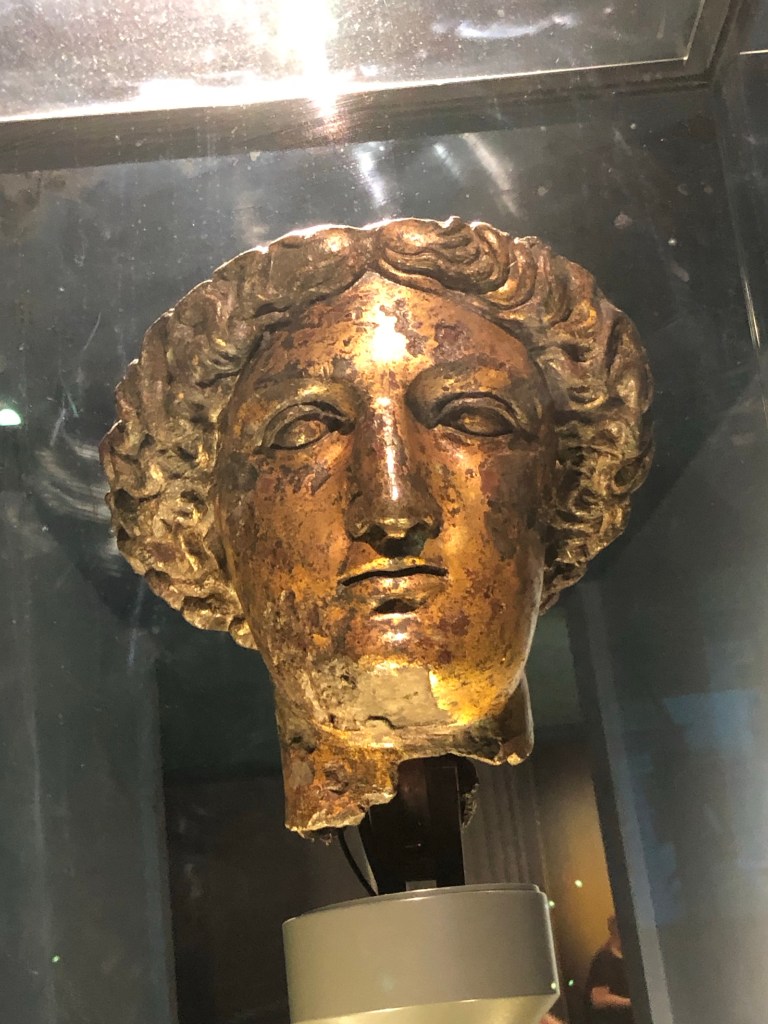
The people of Roman Britain and Aquae Sulis visited the temple to worship the goddess Sulis Minerva. This could be done by making a sacrifice at the Great Altar, where many Altar stones have been found and can be seen on display.
Perhaps the most interesting of these is the Haruspex stone discovered in 1965. Haruspex had a special role in Roman religion as they were diviners of the future, who made predictions about what was to come based on the inspection of the entrails of sacrificial animals. In Cambridge Latin Course speak they were the soothsayers consulted before characters made decisions about major events, or proposed courses of action. Only 60 Haruspex existed at time, so the presence of a Haruspex at Bath, a location far removed from the centre of the Empire, Rome, suggests that Aquae Sulis was a site of great significance.
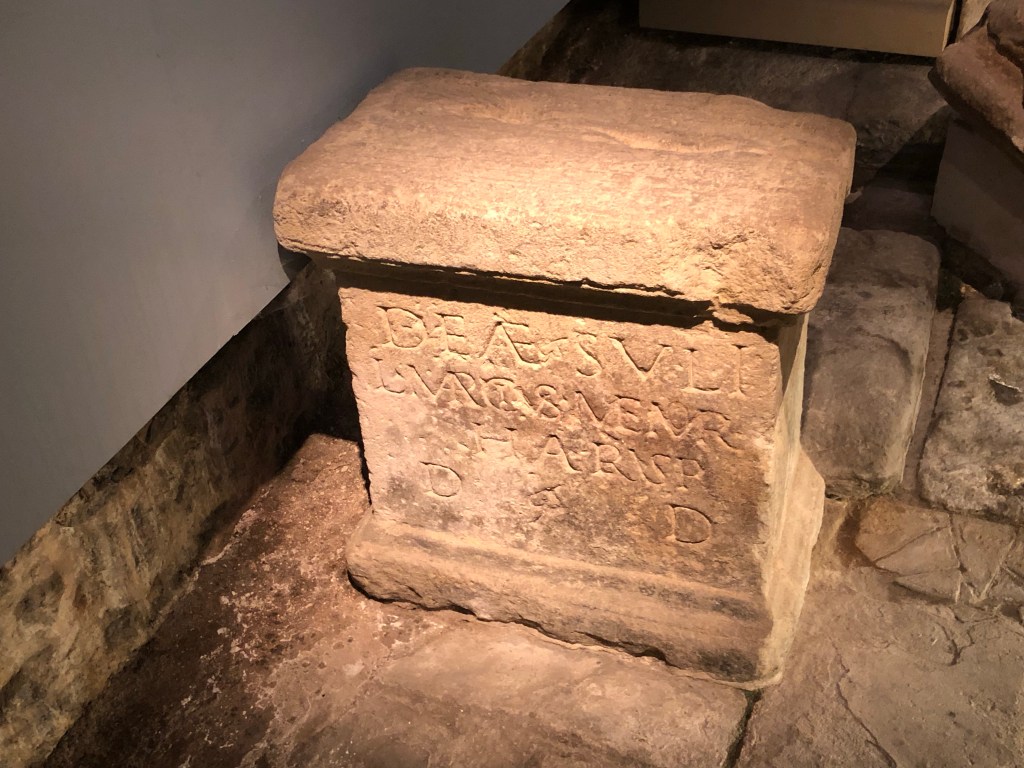
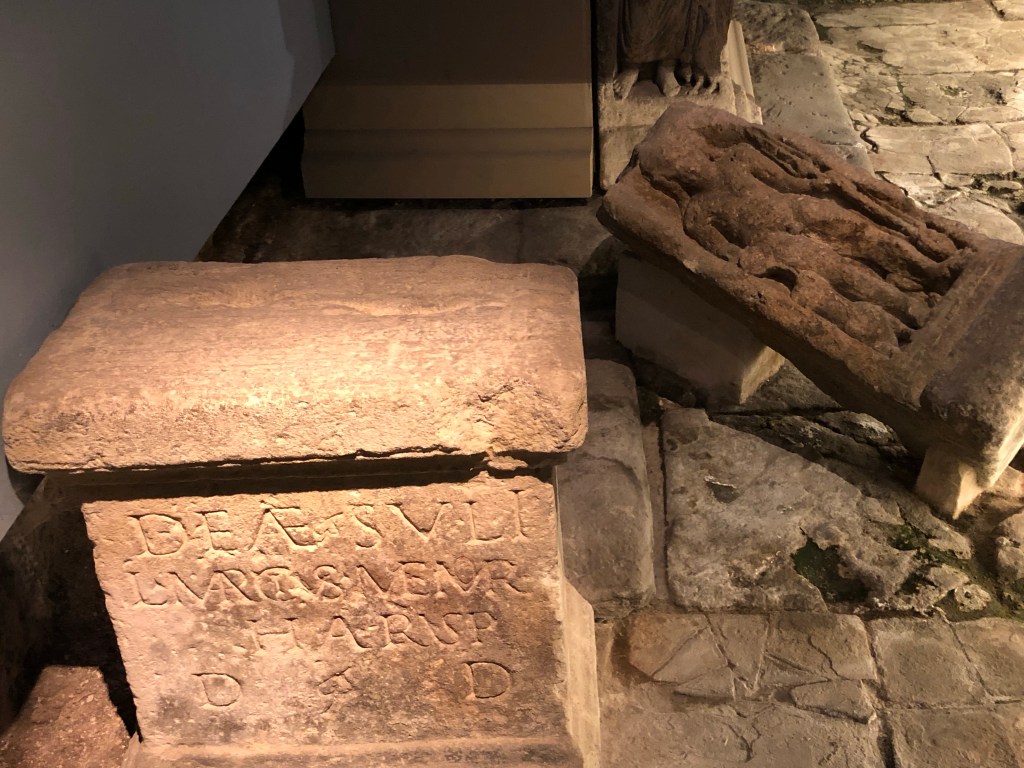
Romans would throw objects such as coins as offerings to Minerva Sulis into the Sacred Spring. Those with enemies would get curses engraved onto sheets of lead, which were folded up and thrown into the Spring. The etchings of which can still be seen and read today.
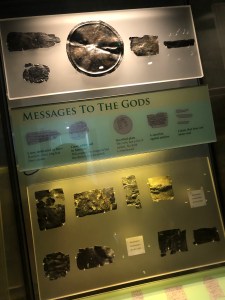
Continually evolving and being updated; the temple remained a focal point for Roman worship until late into the 4th century AD. After this time pagan religions became marginalised as Christianity took hold. In 391 AD the Emperor Theodosius ordered the closure of all pagan temples in the Empire. Eventually the temple collapsed.
Bathing at Aquae Sulis
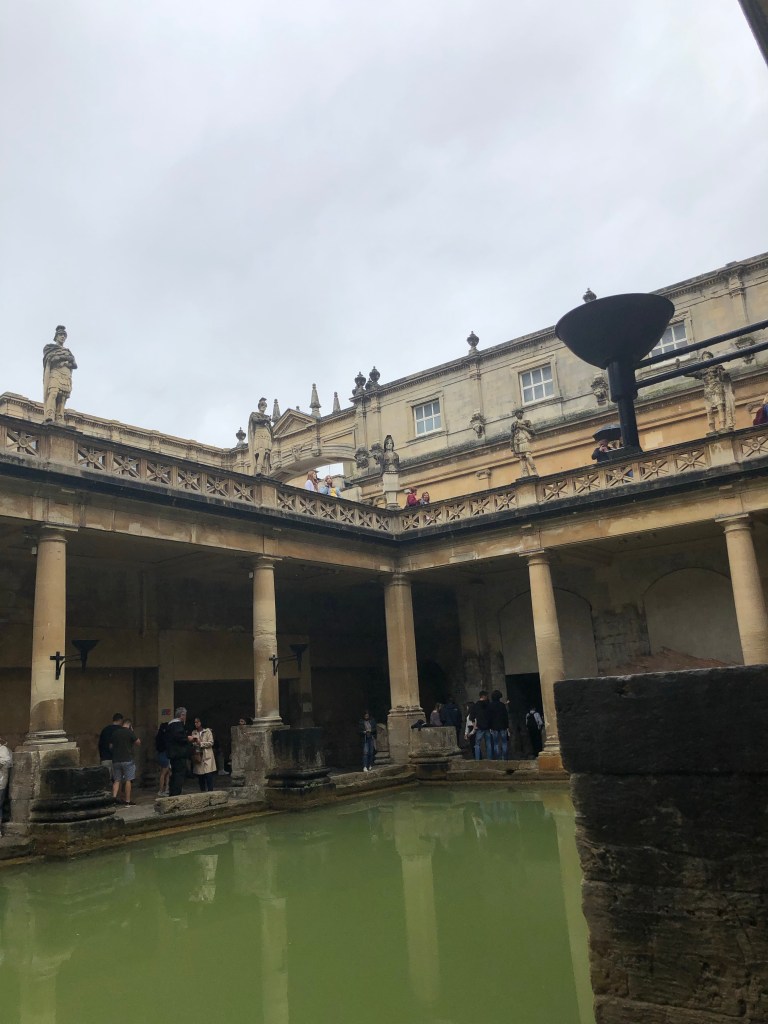
Today, Aquae Sulis is more commonly associated with bathing than religious worship. The iconic steaming pool filled with hot spa water was the centrepiece to the whole complex. The Great Bath is a large pool, lined with 45 sheets of lead to keep the water in. It is 1.6 metres deep and can be accessed by steps from all sides. The bath would have been surrounded by benches for bathers and tables of snacks and refreshments.
There can also be found hot, warm and cold baths; a series of heated rooms; plunge pools; exercise rooms; changing rooms; and saunas. The Baths would have been a place where people from all social groups slaves, priests, freedmen, soldiers, rich Romans and many more would all have interacted.

After the Roman withdrawal from Britain bathing was seen as dangerous and the baths fell into disrepair. In the 18th Century bathing underwent a resurgence and the baths were modified into a structure resembling the one we know today. The Spring was housed in specifically designed buildings and all construction above the level of the pillars was a later addition.

The Spa Water
The Spa Water at Bath has been used for two thousand years as a curative. Initially, treatments focused on bathing in the hot waters. However, it was during the Seventeenth Century that drinking the water came to be a recognised treatment for ailments. The Spa Water contains a mix of 43 minerals and can still be sampled at the Baths today.

Bath and the Regency Period
It was during this time it became fashionable for people to stay at Bath to take the waters. As the great and the good flocked to Bath, the city expanded and developed take advantage of this boom in tourism. The city boasts many fine examples of regency architecture and has been described as built for ‘beauty and pleasure’. One such example of this is the Royal Crescent, a row of 30 terraced houses laid out in a crescent shape, built in 1767.
Jane Austen, a name synonymous with the regency period, moved to Bath in 1800. Two of her Novels, Northanger Abbey and Persuasion, have Bath as a primary location.
I would definitely recommend a visit to Bath for all ancient history A Level and classics A Level students, or potential students. (Or any Jane Austen enthusiasts.) Visiting the Baths will give you a real feel for the time. There’s so much learn from the informative and interactive guided tour of the Baths. Ultimately, there’s no substitute for personal experience and literally walking in the footsteps of the Romans.
 JA Tuition & Academic Services